
He has been removed from the high-profile post on the charges of corruption and dereliction of duty making him the first chief in the history of the agency to face such action.

Along with HAL, Boeing intends to involve the Mahindra Group in building Super Hornets in India.

'It appears that Prime Minister Modi has to undo 50 years of State monopoly in the defence sector during which public undertakings like HAL or DRDO monopolised defence production and development with disastrous consequences.'
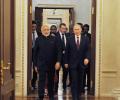
There could be significant announcements about India's purchase of Kamov-226T helicopters, S-400 air defence missile systems, and the long-delayed contract for joint development of the Fifth Generation Fighter Aircraft.

'Make in India' will be central to Mr Modi's visit to Europe and Canada. It is difficult to predict what will happen with the Rafale deal, but if it goes through, it will undoubtedly become the 'Mother' of all 'Make in India' projects,' says Claude Arpi.

The NSA will meet with officials of the French external intelligence agency to forge a very close counter-terrorism relationship with India, reveals Rajeev Sharma.
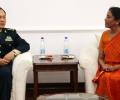
'In the case of an India-Pakistan confrontation, the Chinese may undertake more than just posturing, thereby constraining us from deploying adequate forces for decisive results,' warns Brigadier S K Chatterji (retd).
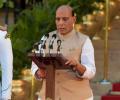
The new minister must commit himself to supporting long-term defence plans or else defence modernisation will continue to lag and the growing military capabilities gap with China will assume ominous proportions, warns Brigadier Gurmeet Kanwal (retd).

Defence Minister Manohar Parrikar says global aircraft makers will have to get approval from their own governments to transfer technology and build jets in India.

'The defence minister needs to focus on human resources-related issues at the same pace in 2017 as he did on acquisitions in 2016,' says Brigadier S K Chatterji (retd).

A bail plea was also moved on his behalf. The court did not give any specific date for hearing the bail plea.
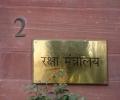
India's cumbersome arms procurement procedures and a plodding Ministry of Defence bureaucracy have long been blamed for shortfalls in combat capability. Now there is another, more worrying, reason - a growing crisis of funds, magnified by the lack of tri-service coordination.

Prime Minister Narendra Modi on Sunday thanked France and wrapped up his first visit to Paris that saw the two nations elevate their strategic ties to a new level as they agreed on a deal for 36 Rafale fighter jets and decided to move ahead with the log-jammed Jaitapur nuclear project.
'The government has belied the hope that many harboured of change, efficiency and dismantling old practices as the defence ministry continues to pursue the same well trodden and wasteful path.'
'An expanding army, rising salaries due to the 7th pay commission, and raised pensions due to OROP are consuming money at the cost of badly needed bulletproof jackets, rifles, artillery, submarines, warships and fighter aircraft,' notes Ajai Shukla.
We get tangled up in our own crooked web on purchases, and the murky arms bazaar knows it, says Shekhar Gupta.

The nexus between middlemen, arms agents and government officials has been broken, according to Defence Minister Manohar Parrikar.

How will the Modi Sarkar's likely return affect other nations?
'The armed forces have been given clear indication that they have to give priority to Make in India and indigenisation and dependence on foreign source should be reduced.' 'Almost Rs 90,000 crores contracts have been signed during my tenure. Another almost Rs 70,000 crores are in the pipeline.'
 © 2026 Rediff.com - Advertise with us - Disclaimer - Privacy Policy - Sitemap - Feedback - About us - Terms of use - Grievances